








AKATH KAHAANI PREM KI: THE UNTELLABLE TALE OF LOVE
Dec 14, 2025

Amphibian Aesthetics emerges from the urgencies of precarity in the Anthropocene—climate collapse, displacement, extinction, and hyper-capital—where questions of survival and radicality become inseparable from artistic practice. The exhibition unsettles familiar binaries of East/West, tradition/modernity, embracing entangled, rhizomic ways of thinking that refuse fixed hierarchies. The ‘amphibian’ stands as a figure of adaptability and shared vulnerability, moving between land and water, past and future, human and more-than-human worlds. Building on earlier explorations of Kerala’s oceanic histories—of migration, trade, and climatic shifts—Amphibian Aesthetics presents these entanglements as sites of both crisis and possibility. In foregrounding water’s agency and multispecies coexistence, the exhibition invites multisited and multimodal ways of imagining collective futures. Here, art becomes not merely a mirror to the world but an amphibious gesture—fluid, resilient, and attuned to the fragile ecologies that shape our shared survival.
The exhibition brings together 12 artists and collectives from South Asia, the Middle East and Europe, who play with the emerging precarities of our planet, suggesting multiple modes of being. It explores the aspects of ‘amphibian’ as an artful way of mediating migrations and exile, memory and history, traditions and identities across time and space.
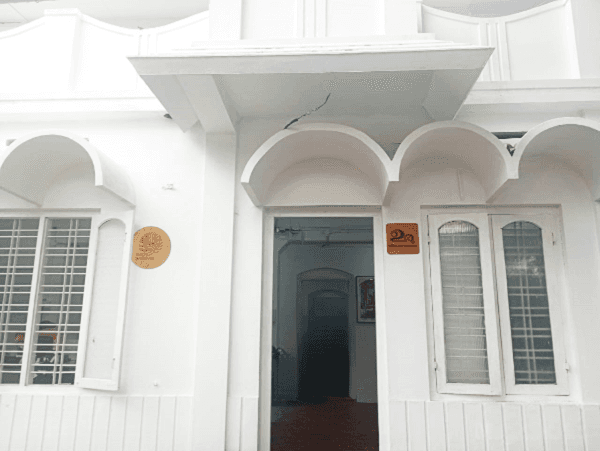
Kashi Hallegua House, the main site of the Ishara House project, was built more than 200 years ago in the historic Jewish quarter of Mattancherry, Kochi, Kerala. Once serving the town’s Jewish community, the building has since become a cultural and architectural landmark.